Storm Damage
How to Spot Hail Damage on Your Roof (Without Climbing Up There)
Hail bruises a shingle long before it leaks. Here are the ground-level signs Panhandle homeowners can check after a storm, and when to call for an inspection.
By Taylor Smith · · 6 min read
Every spring we get the same call: "We had hail last night but the roof looks fine from the driveway." That's usually true, and it's also why so much hail damage goes unclaimed until it's too late. Impact damage bruises the asphalt mat underneath the granules. The shingle looks intact for a year or two, then it starts failing all at once.
You don't need to get on the roof to know whether an inspection is worth your time. Check these five things first.
1. Look at your soft metals
Gutters, downspouts, roof vents, the metal cap on your chimney, and the fins on your A/C condenser are all softer than shingles. If hail was big enough to hurt your roof, it left dents in at least one of them. Stand at the corner of the house and sight down the gutter run against the light — dimples show up clearly at a low angle.
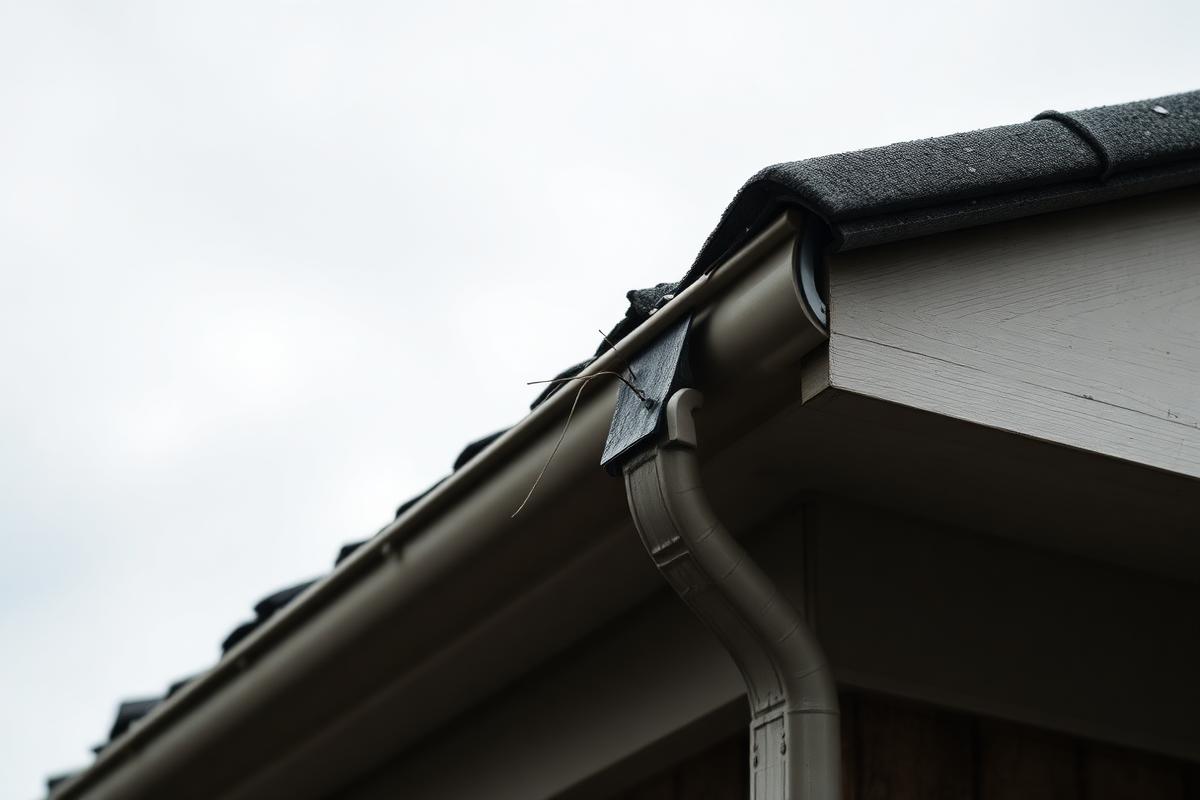
2. Check the downspout outlets for granules
A handful of granules after a heavy rain is normal, especially on a newer roof. A pile that looks like coarse black sand at the bottom of every downspout is not. That's the protective layer that shields the asphalt from UV, and once it's knocked loose the shingle ages years in months.
3. Inspect painted and wood surfaces
Hail doesn't fall straight down. Wind-driven stones chip paint on the leeward side of fascia boards, ding wooden fences, and splatter-mark deck boards. Fresh, light-colored chips with no weathering mean the impact was recent — useful evidence for your claim's date of loss.
4. Walk the yard and look at the window screens
Torn or pushed-in screens, damaged window wraps, and dented garage doors all raise the probability that the roof took real hits. Adjusters look at these same elevations, and they help establish storm direction.
5. Note the storm details while you remember them
- Date and rough time the hail fell
- Stone size compared to a coin — pea, dime, quarter, golf ball
- How long it lasted and which direction the wind was blowing
- Any photos or video you or a neighbor took
This is the single most useful thing you can do. Claims get complicated when the loss date is a guess.
When to call for a professional inspection
If you found dents in soft metals, or the storm produced quarter-size or larger hail, get a documented inspection. A qualified roofer marks a ten-foot test square on each slope, counts impacts, and photographs the results — the same method the adjuster uses. That report is your evidence whether you file now or two months from now.
What you shouldn't do is wait for a leak. By the time water shows up on a ceiling, the storm that caused it may be outside your policy's filing window, and the repair scope is now roof and drywall.