Storm Damage
Your Roof Is Leaking Right Now: The First 60 Minutes
A practical, do-this-now guide for homeowners with an active roof leak — protecting the house, limiting the damage and documenting it for the claim.
By Taylor Smith · · 5 min read
An active leak is a race between you and the drywall. Here is the order of operations we give homeowners on the phone.
1. Move what matters
Electronics, rugs, furniture, paperwork. Water travels along rafters and shows up feet away from the actual hole.
2. Contain it
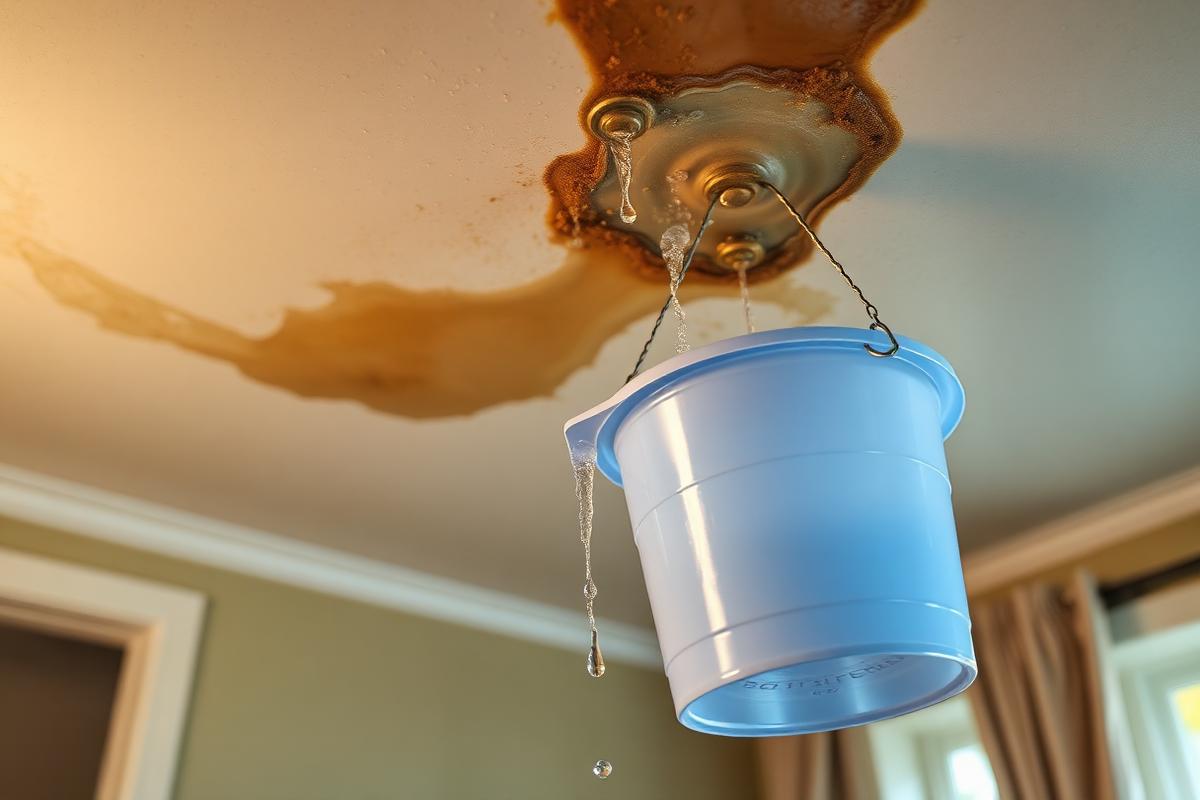
Buckets under the drip, towels around the base. If the ceiling is bulging, that is trapped water — put a bucket underneath and poke a small hole in the low point with a screwdriver. It feels wrong; it saves the whole ceiling.
3. Kill power to the affected area
If water is near a light fixture, ceiling fan, or outlet, flip that breaker.
4. Photograph before you clean
Wide shot of the room, close shot of the stain, a photo of the bucket filling. Time-stamped photos matter more than anything you say later.
5. Do not get on a wet roof
Wet asphalt is genuinely dangerous, and every year homeowners fall trying to tarp their own roof mid-storm. Call for an emergency tarp instead.
6. Then call
Tell the roofer the age of the roof, whether there was recent hail or wind, and where the water shows inside. That determines whether we bring a tarp crew or a repair crew.
Leaks rarely start the day you see them. The stain is the end of a process that began at a failed flashing or a lifted shingle months ago — which is why the fix is usually not directly above the drip.