Homeowner Tips
Roof Repair vs. Replacement: How to Make the Call Honestly
A practical framework for deciding whether to repair or replace your roof, including the age, damage-area and cost thresholds we use on every estimate.
By Taylor Smith · · 7 min read
Ask three roofers whether to repair or replace and you may get three answers, largely because the incentives differ. Here's the framework we actually use internally, so you can run the numbers yourself before anyone shows up with a proposal.
Start with age against expected life
- Under 10 years: repair, almost always. The system has plenty of life left and the failure is usually a detail, not the field.
- 10–17 years: depends on the extent. Isolated damage gets repaired; widespread granule loss changes the math.
- 18+ years on a 25-year shingle: repairs become throwing money at a roof you'll replace within a few seasons.
West Texas roofs run short of their rated life. UV at elevation, temperature swings and abrasive blowing dust mean a "30-year" shingle here often behaves like a 20-year shingle elsewhere. Adjust the brackets down accordingly.
Measure damage as a percentage of the roof
Damage confined to under roughly 25–30% of a single slope is repair territory. Once it's spread across multiple slopes, or you're chasing a new leak every few months, you're paying replacement money in installments and getting a patchwork roof for it.
Apply the 30% cost rule
If the repair estimate approaches 30% of a full replacement, replace. You get a new warranty, a fresh underlayment system, and the deck gets inspected — none of which a repair delivers.
Things that push toward replacement regardless of age
- Sagging rooflines — that's structural or decking, and shingles won't fix it
- Multiple layers — most jurisdictions cap at two, and a third means tear-off anyway
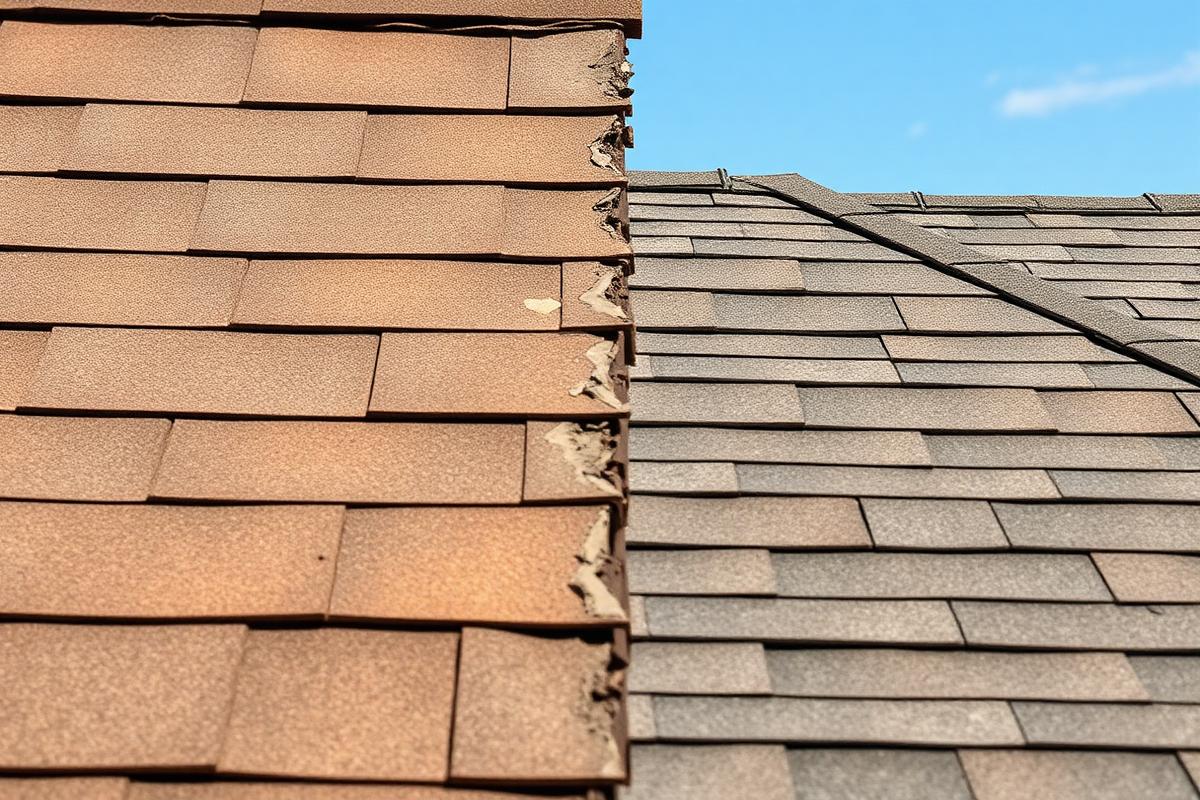
- Widespread cracked or curling shingles — the mat is spent
- Repeated interior staining in different rooms — the system is failing, not a spot
Things that push toward repair
- Damage traced to one penetration, boot or flashing joint
- A specific wind event that lifted a defined section
- Selling within a year and the inspection only flags specific items
- Matching material is still available in your profile and color
Get both numbers, always
Any contractor should be willing to quote the repair and the replacement and explain which they'd choose for their own house. If someone will only give you a replacement number on a twelve-year-old roof with one leak, that tells you something about the estimate, not about your roof.